KS Learning can provide extra lessons for maths from gcse maths tutors in London and help with gcse maths past papers, gcse maths revision notes, and gcse maths revision worksheets. Maths private tuition at its tuition centre can improve maths knowledge and performance through maths lessons, mathematics tutorials and maths tuition Twickenham.
| Question | Answer |
|---|---|
| Name the three states of matter. | solid, liquid, and gas |
| What is another phrase for the states of matter. | the phases of matter |
| State the physical properties of solids. |
• fixed shape, • fixed volume, and • cannot be compressed |
| State the physical properties of liquids. |
• take the shape of their container, • fixed volume, and • cannot be compressed |
| State the physical properties of gases. |
• have no fixed shape, • no fixed volume, • are easy to compress |
| What does the particle theory describe? | it describes • the movement of particles, and • the average distance between particles |
| How is a solid described using the particle theory? | particles are • close together, • in a fixed position and • vibrate constantly in this position |
| How is a liquid described using the particle theory? | particles are • close to each other, • constantly change their position by • moving freely but slowly passed and over each other |
| How is a gas described using the particle theory? | particles are • far apart, • are in constant motion, and • move freely at high speeds |
| What is pressure? | pressure is the result of gas particles colliding against the walls of the container |
| What makes the particles of a gas move faster? | heating the gas so an increase in temperature |
| What happens to pressure when a gas is heated and why? | particles move faster and collide with the walls more often so pressure increases |
| Name the point when a solid turns into a liquid. | the melting point |
| What is the difference in temperature between when a solid turns to liquid, and a liquid turns to solid? | none, they are the same value |
| What is the term for a liquid turning to a solid? | freezing |
| What is the impact of temperature on the motion of particles in a solid? | they vibrate faster when temperature increases |
| What is happening in a solid to the particles when it begins to change to a liquid? | the vibrations are so strong that the particles begin to break free from their fixed positions |
| Name the point where a liquid turns into a gas. | the boiling point |
| What is the term for a gas turning into a liquid? | condensation |
| What is the effect on the particles of a liquid of increasing temperature? | they move faster and faster as temperature increases |
| What is the term for particles escaping from a liquid before it reaches its boiling point? | evaporation |
| Why does evaporation happen? | because some particles gain enough energy to break free from the liquid and become a gas |
| How do physical and chemical changes differ? | no new substances are formed with physical changes while with chemical changes result in new substances |
| Why do substances have different boiling points? | the forces between particles vary in strength in different substances |
| How do the forces between particles in a solid affect boiling point? | the stronger the forces between particles, the higher the boiling point |
| What happens to the temperature of a solid when it is heated? | the temperature of the solid rises |
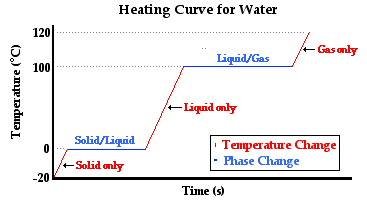
| What happens to temperature of a solid when it starts to melt? | the temperature remains constant until the solid has completely melted and then starts to rise again |
| Why does the temperature of a melting solid remain constant while it melts? | the energy provided by heating is used to break the bonds between the particles of the solid |
| What happens to the temperature of a liquid when it is heated? | the temperature of the liquid rises |
| Why does the temperature of a boiling liquid remain constant until all the liquid has boiled away? | the energy provided by heating is used to break the bonds between the particles of the liquid |
| What happens to temperature of a liquid when it starts to boil? | the temperature remains constant until the liquid has completely turned into a gas |
| Sketch a graph of temperature against time when heating a substance from solid to gas |
|
| Question | Answer |
|---|---|
| What is a substance? | a general term for a kind of matter with uniform properties |
| What is a mixture? | two or more substances combined that can be separated by physical means |
| Give an example of a mixture. | sugar disolved in tea |
| What is an element? | a substance made up of one type of atom i.e. all the atoms have the same number of protons |
| What is a molecule? | two or more atoms chemically combined |
| What is a compound? | two or more elements chemically combined |
| What group are the noble gases? | group 0 |
| Why are the atoms of the noble gases stable and unreactive? | because of the arrangement of their electrons |
| What happens when atoms or molecules react? | they change their electronic structure to make it a stable arrangement |
| What three types of bonding exist? | metallic, covalent and ionic bonding |
| What is covalent bonding? | bonds created by sharing electrons |
| What is ionic bonding? | bonds created by transferring electrons |
| What is an ion? | an atom or molecule that has gained or lost electrons to carry a charge |
| What electronic structure do ions seek to have? | the nearest noble gas |
| What electronic structure does a sodium atom have? | a sodium atom has (2,8,1) |
| What noble gas is closest to sodium? | neon |
| What is the electronic structure of neon? | a neon atom has (2,8) |
| What noble gas electronic structure does a sodium ion have? | a sodium atom with an electronic structure of (2,8,1) loses one electron so that it has the electronic structure of neon (2,8) |
| What is the difference between a neon atom and a sodium ion? | a sodium ion has one more proton than a neon atom |
| What is the same between a neon atom and a sodium ion? | a sodium ion and a neon atom have the same electronic structure of (2,8) |
| What is the charge on a sodium ion? | a single positive charge |
| Why is the charge on a sodium ion 1+? | sodium has one mpre proton than electron |
| What is the formula for a sodium ion? | Na+ |
| What ions do non-metals form when reacting with metals? | negative ions |
| Why do non-metals form negative ions? | to achieve the electronic structure of the nearest noble gas |
| How do non-metals form negative ions? | by gaining electrons |
| What group is chlorine in? | group 7 |
| What is the electronic structure of chlorine? | (2,8,7) |
| What is the noble gas nearest to chlorine? | Argon |
| What is the electronic struture of argon? | (2,8,8) |
| What does chlorine do to get the same electronic structure as argon? | it gains an electron |
| What is the electronic structure of argon? | (2,8,8) |
| What is the electronic structure of a chlorine ion? | (2,8,8) |
| What is the formula for the chlorine ion? | Cl- |
| Why does the chlorine ion have a 1- charge? | Cl- has one more electron than proton |
| What does a chlorine ion have in common with an argon atom? | both have the same electronic structure of (2,8,8) |
| How does a chlorine ion differ from an argon atom? | an argon atom has one more proton than a chlorine ion |
| Do metals lose or gain electrons? | they tend to lose electrons |
| Draw the dot-cross diagram for sodium. | sodium is Na11 (2, 8, 1)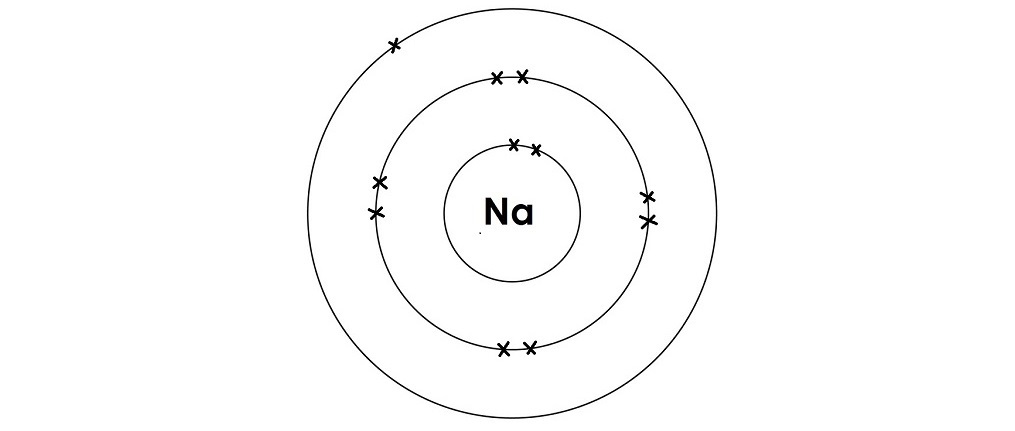
|
| What happens to sodium when it forms an ion? | it loses an electron and becomes a 1+ ion |
| Draw the dot-cross diagram for sodium. | sodium ion is Na+ (2, 8)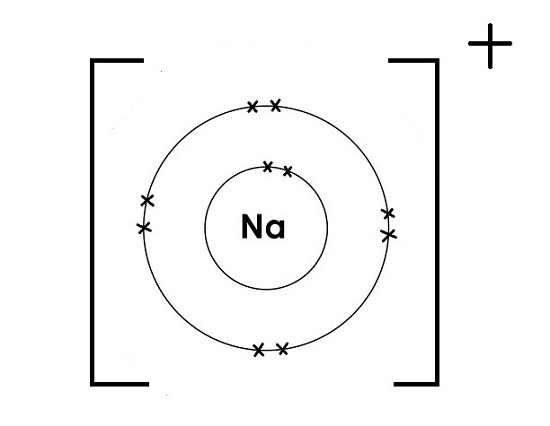
|
| Draw the dot-cross diagram for chlorine. | chlorine is Cl17 (2, 8, 7)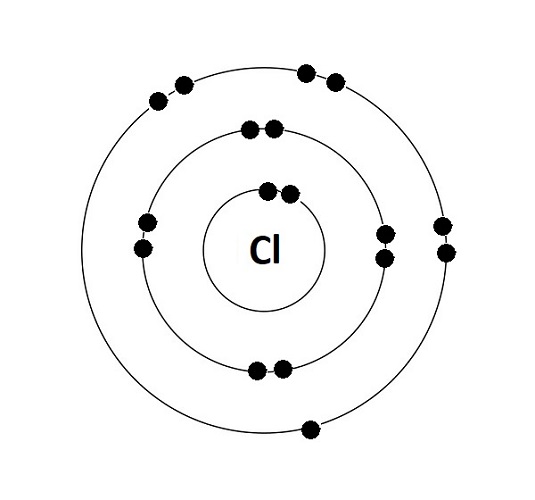
|
| What happens to chlorine when it forms an ion? | it gains an electron and becomes a 1- ion |
| Draw the dot-cross diagram for the chlorine ion. | chlorine ion is Cl+ (2, 8, 8)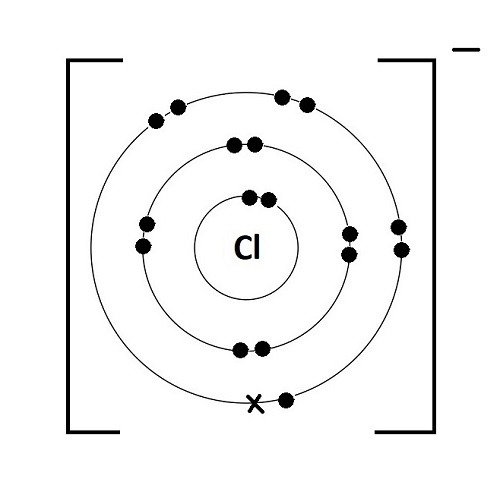
|
| What is the correct name for a chlorine ion? | a chloride ion |
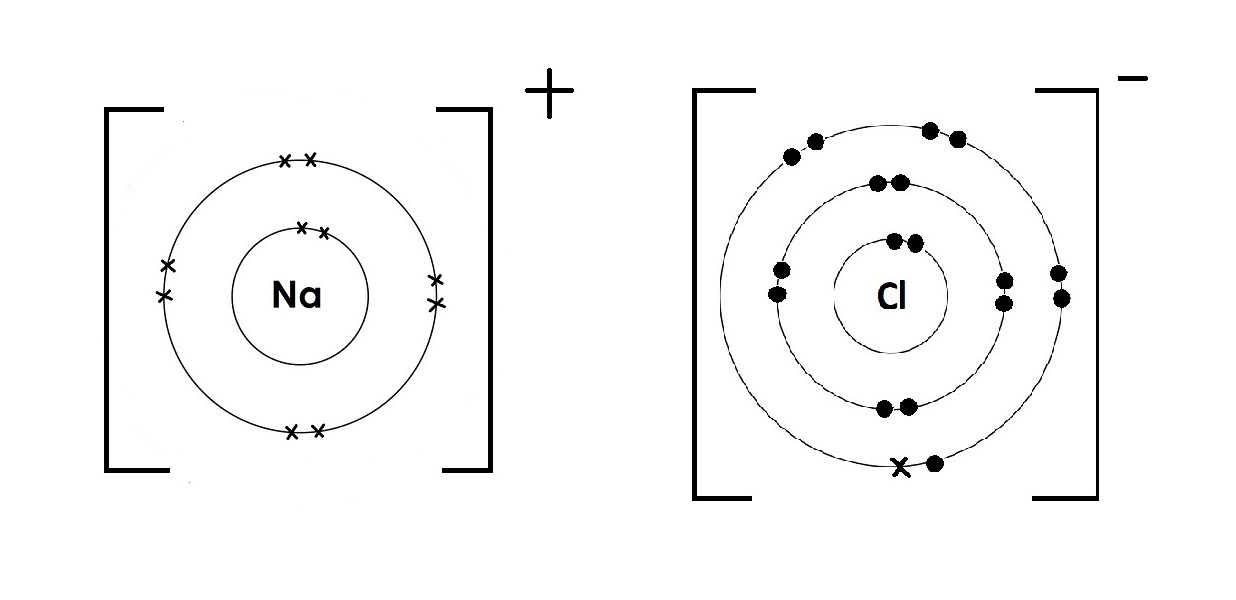
| When sodium reacts with chlorine what happens in terms of electrons? | sodium (group I metal) loses one electron and chlorine (group VII) gains one electron |
| What is the electrostatic attraction between the sodium and chlorine ions called? | ionic bonding |
| Draw the dot cross diagram for sodium chloride |
|
| Question | Answer |
|---|---|
| What types are ions exist? | positive and negative ions |
| Which elements usually form positive ions? | the metals |
| Which elements usually form negative ions? | the non-metals |
| Which elements form ionic compounds? | usually a metal and a non-metal such as NaCl where Na is a metal and Cl is a non-metal |
| What keeps the ions in ionic compounds together? | the oppositely charged ions attract each other strongly |
| What are the forces between negative and positive charges called? | electrostatic forces |
| Are electrostatic forces strong or weak? | electrostatic forces are incredibly strong |
| What is ionic bonding? | the strong electrostatic forces of attraction holding oppositely charged ions together are ionic bonding |
| What direction do electrostatic forces operate in? | in all directions |
| What structure does ionic bonding result in? | the ions are arranged in a giant structure or giant lattice |
| Describe the forces in an ionice lattice. |
• the attractive electrostatic forces act in all directions • the attractive electrostatic forces are very strong • it holds the ions in the giant lattice together very tightly |
| What do group 1 metals have in common in terms of their electronic structure? | they all have 1 electron in their outer shell |
| What ions do group 1 metals form? | they all form 1+ ions |
| Why do group 1 elements form 1+ ions? | because they lose 1 electron to obtain a stable electronic structure |
| How many electrons do group 7 electrons have in their outer shell? | they all have 7 electrons in their outer shells |
| What ions do group 7 non-metals form? | they all form 1- ions |
| Why do group 7 elements form 1- ions? | because they gain 1 electron to obtain a stable electronic structure |
| How do group numbers relate to the number electrons in the outer shell of elements? | the number of electrons in the outer shell matches the group number so • group 1 elements have 1 electron • group 2 elements have 2 electrons • group 3 elements have 3 electrons • group 4 elements have 4 electrons • group 5 elements have 5 electrons • group 6 elements have 6 electrons • group 7 elements have 7 electrons • group 8 elements have 8 electrons |
| How do group numbers relate to the charges on ions of elements? | the charge matches the number of electrons lost or gained to form an ion • group 1 ions have a 1+ charge • group 2 ions have a 2+ charge • group 3 ions have a 3+ charge • group 4 elements never form ions except tin Sn and lead Pb • group 5 ions have a 3- charge • group 6 ions have a 2- charge • group 7 ions have a 1- charge • group 8 elements never form ions in compounds |
| What electronic structure do atoms try to form when they form an ion? | the electronic structure of the closest noble gas |
| What is the electronic structure of magnesium Mg? | Mg (2, 8, 2) |
| What is the electronic structure of the magnesium ion Mg2+? | Mg2+ (2, 8) |
| What does magnesium do to form the magnesium ion Mg2+? | it loses the 2 electrons in its outer shell |
| What is the electronic structure of oxygen O? | O (2, 6) |
| What is the electronic structure of the oxygen ion O2-? | O2- (2, 8) |
| What does oxygen do to form the oxygen ion O2-? | it gains 2 electrons to add to its outer shell making a total of 8 electrons in the outer shell |
| What happens to form the ionic compound MgO? |
• magnesium loses 2 electrons to oxygen • magnesium forms Mg2+ • oxygen forms O2- • the charges on each ion hold them together to form MgO |
| What is the electronic structure of calcium? | Ca (2, 8, 8, 2) |
| What ion does calcium form? | Ca2+ |
| What is the electronic configuration of Ca2+? | Ca2+ (2, 8, 8) |
| What is the electronic structure of chlorine? | Cl (2, 7) |
| What ion does chlorine form? | Cl1- |
| What is the electronic configuration of Cl1-? | Cl1- (2, 8) |
| What happens to form the ionic compound CaCl2? |
• calcium loses 2 electrons to form Ca2+ • chlorine gains 1 electron to form Cl1- • this leaves an extra electron • so a second chlorine atom gains the extra 1 electron to form another Cl1- • the three ions are drawn together by their charges to form CaCl2 • every calcium atom bonds to two chlorine atoms so the electrons lost by calcium are the same number as those gained by the chlorines |
| Question | Answer |
|---|---|
| Describe the forces in an ionice lattice. |
• the attractive electrostatic forces act in all directions • the attractive electrostatic forces are very strong • it holds the ions in the giant lattice together very tightly |
| Are the bonds in an ionic lattice easy to break? | no, it takes a lot of energy to break the many ionic bonds in a giant ionic lattice |
| Why do ionic substances have high melting points? | because the ionic bonds in the lattice are strong and require a lot of energy to break them |
| Why do ionic substances have high boiling points? | because the ionic bonds in the lattice are strong and require a lot of energy to break them |
| What happens when enough energy is supplied to melt an ionic substance? | the ions separate from the lattice and move freely around in the liquid |
| What do the ions in a molten ionic solid do when electrodes are inserted into the liquid? | they are attracted to oppositely charged electrodes |
| Do solid ionic substances conduct electricity? | no |
| Why do solid ionic substances not conduct electricity? | the ions with their charges cannot move around as they are fixed in position in the lattice |
| Do molten ionic substances conduct electricity? | yes |
| Why do molten ionic substances conduct electricity? | the ions with their charges are free to move around in the molten liquid |
| Do ionic compounds dissolve in water? | many but not all ionic compounds dissolve in water |
| What happens when an ionic compound is disolved in water? | the ionic bonds are broken by the water molecules and the ions move around freely |
| What do the ions do when an ionic compound is dissolved and electrodes are placed in the solution? | the ions move to oppositely charged electrodes as they are free to move around in the solution |
| Do solutions of ionic compounds conduct electricity? | yes |
| Why can solutions of ionic compounds conduct electricity? | because the ions in the solution are free to move |
| Question | Answer |
|---|---|
| What type of bonding results when metals and non-metals combine? | ionic bonding |
| What type of bonding results when non-metals bond with non-metals? | covalent bonding |
| What is covalent bonding? | the sharing of electrons |
| Why do non-metals form covalent bonds when they bond together? | non-metals tend to gain electrons to achieve a stable outer shell but when non-metals bond with each other, they cannot both lose electrons so they share electrons |
| What holds the atoms together in covalent molecules? | their shared pairs of electrons |
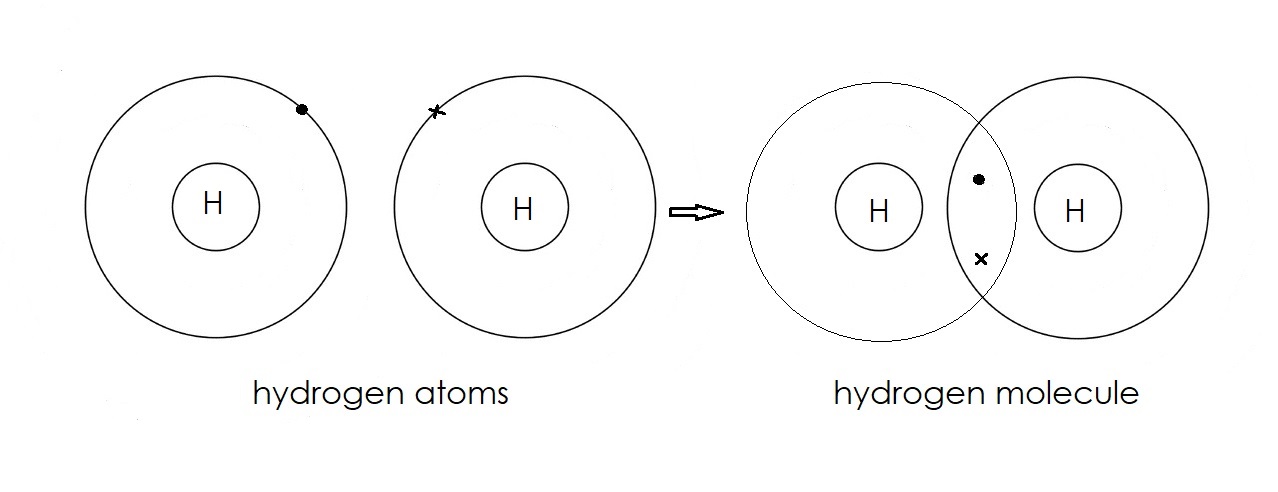
| Write the formula for hydrogen gas. | H2 |
| Using dot-cross diagrams, draw the formation of a hydrogen molecule, H2 |
|
| Write the formula for oxygen gas. | O2 |
| Using a dot-cross diagram, draw the formation of a oxygen molecule, O2 |
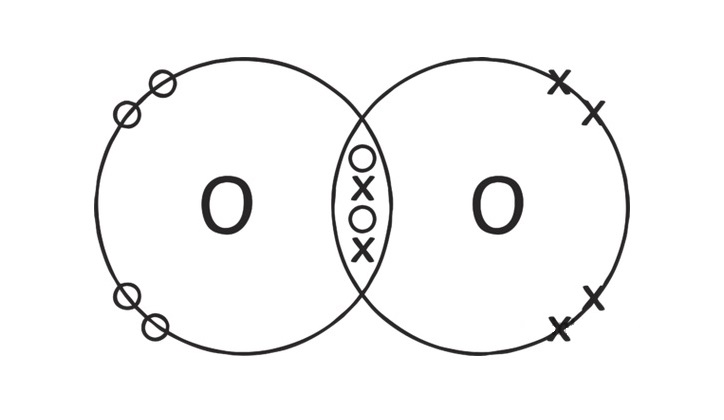
|
| Write the formula for water. | H2O |
| Using a dot-cross diagram, draw a water molecule, H2O |
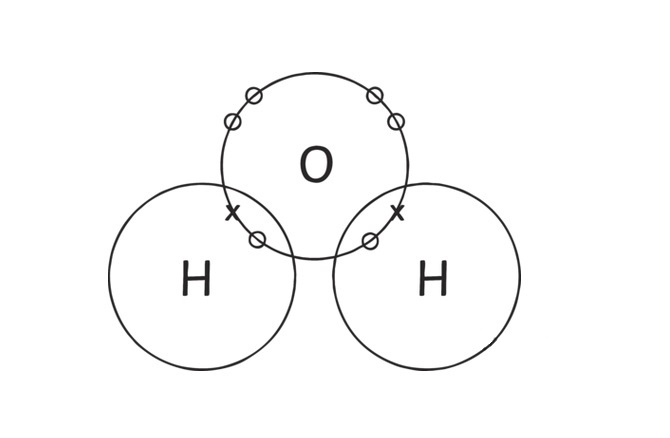
|
| Write the formula for nitrogen gas. | N2 |
| What is the formula for ammonia? | NH3 |
| What is the formula for methane? | CH4 |
| What are the 3 ways of representing bonding in covalent molecules? | showing the outer shells the outer electrons in a dot cross diagram the number of covalent bonds |
| Draw all 3 representations of ammonia. |
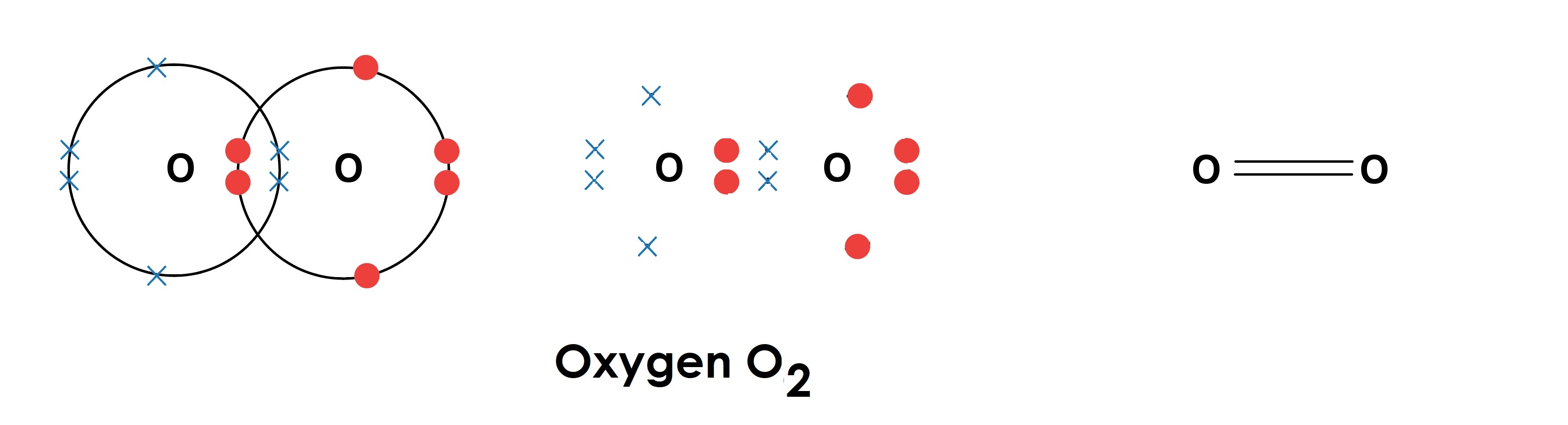
|
| Draw all 3 representations of ammonia. |
|
| What two forms do covalent molecules take? | small molecules and giant structures |
| What is a giant covalent structure? | huge numbers of atoms held together by a network of covalent bonds |
| What is another name for giant covalent structures? | macromolecules |
| Name a substance that is a giant covalent structure. | diamond |
| Describe the structure of diamond. |
• each carbon atom forms four covalent bonds • each bond bonds to another carbon • this produces a rigid giant lattice |
| Question | Answer |
|---|---|
| Name five models used to represent molecules. |
• dot and cross • ball and stick • 2D diagrams • 3D diagrams • displayed formula |
| What is the limitation of a 2D ball and stick diagram? | it does not show the true shape of the molecule it shows the H-C-H angles as 90° whereas they are 109.5° 
|
| How can the true shape of a molecule be shown? | using a 3D model using a molecular model kit |
| WWhat does a dot and cross diagram show? | it shows which atom the electrons in a bond come from |
| How do electrons in a covalent bond behave? | the electrons in a covalent bond are constantly moving but are on average found most of the time between the two nuclei of the atoms that they are bonding |
| What can models be used to illustrate with giant structures? | they can indicate the chemical formula of a compound by the simplest ratio of the atoms or ions of their giant structures |
| What can models NOT be used to illustrate with giant structures? | they cannot accurately reflect the many millions of particles (atoms or ions) bonded together in giant structures |
| How strong are covalent bonds? | covalent bonds are very strong |
| What type of bond is a covalent bond? | an intra-molecular bond |
| What is the effect of covalent bonds being strong? | the atoms in a covalent molecule are held very tightly together |
| Are there forces between molecules? | yes |
| What is the type of bond or forces called between molecules? | an intermolecular force |
| How strong are intermolecular forces? | very weak by comparison to intramolecular bonds |
| What is the effect of increasing molecule size on intermolecular forces? | intermolecular forces increase with the size of molecules |
| Name two effects of increasing intermolecular forces | higher melting and boiling points |
| Why are polymers solid at room temperature? | polymers are large molecules so have relatively strong intermolecular forces which makes them solids at room temperature |
| Why are the melting and boiling points of substances made up of simple molecules low? | because they are small molecules and thus have weak intermolecular forces |
| What are polymers made of? | they are made up of many small reactive molecules that bond to each other to form long chains |
| What is polythene made from? | it is made from thousands of ethene molecules reacted to form a long chain |
| Draw the structural formula of polythene |
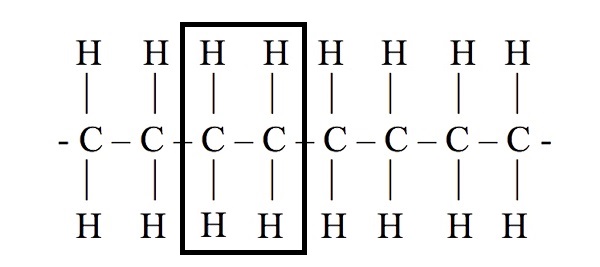
|
| Draw the simplified structural formula of polythene |
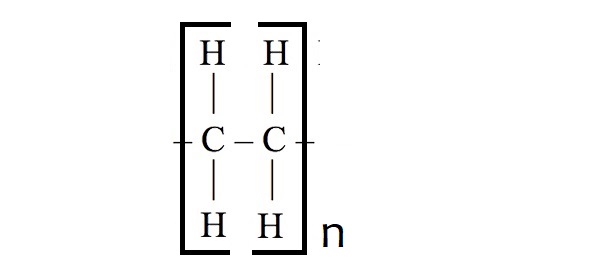
|
| When do ionic substances conduct electricity? | when they are liquids or in solution |
| Why do ionic substances conduct electricity? | because they contain charged particles called ions |
| Do simple covalent compounds conduct electricity as liquids? | no, they do not |
| Why don't simple covalent compounds not conduct electricity as liquids? | the molecules of simple covalent compounds have no overall charge |
| Question | Answer |
|---|---|
| What elements does diamond contain? | only Carbon |
| What element does pencil lead contain? | only Carbon |
| Name the hardest known natural substance. | diamond |
| Can people make diamonds? | yes, they are known as artificial diamonds |
| How are artificial diamonds made? | by putting carbon under extremely high pressure and temperature |
| Name a use of artificial diamonds. | embedded in the drills used by oil companies to drill through rock to get to oil |
| What is the structure of diamond? | a giant covalent structure |
| Describe a giant covalent structure. | they are made of huge networks of atoms held together by covalent bonds |
| Name three giant covalent structures. | diamond, graphite, silica |
| What is the chemical formula of silica? | silicon dioxide |
| State the properties of giant covalent structures. |
• high melting points • high boiling points • insoluble in water • hard (graphite is an exception) • do not conduct electricity |
| What is the boiling point of diamond? | 4827 °C |
| Describe the chemical structure of diamond? | each carbon atom is bonded to four other carbon atoms by covalent bonds, arranged in a perfectly symmetrical giant lattice |
| Name two forms of Carbon. | diamond and graphite |
| Describe the structure of graphite. |
• each carbon atom is bonded to three other carbon atoms • the bonds between carbon atoms are covalent bonds • bonded carbon atoms form hexagons • bonded carbon atoms form layers • there are no covalent bonds between layers • there are weak intermolecular forces between the layers • the layers can slide over each other |
| How many bonds does Carbon form in graphite? | three strong covalent bonds |
| How many electrons does Carbon have in its outer shell for bonding? | four |
| What happens to the four outer shell electrons in carbon? | three are involved in strong covalent bonds and one is left to move free in graphite |
| What is the free electron in graphite known as? | a delocalised electron |
| What is meant by a delocalise electron? | an electron that does not belong to any one specific atom and is free to move within a structure |
| What do the delocalised electrons in graphite do? | they move freely along the layers |
| Does graphite conduct electricity? | yes |
| Why does graphite conduct electricity? | it contains delocalised electrons that are able to move along the layers |
| Why does diamond not conduct electricity? | it does not contain any delocalised electrons as all the outer shell electrons are involved in strong covalent bonds |
| Does Carbon conduct heat? | when in the form of graphite, carbon conducts heat, but in the form of diamond, carbon does not conduct heat |
| How does graphite conduct heat? | the delocalised electrons carry heat along the layers |
| Question | Answer |
|---|---|
| Apart from diamond and graphite, what other form does carbon come in? | fullerenes |
| What structures do fullerenes exist as? | large cage-like structures and tubes |
| How many carbon atoms in the first fullerene made? | 60 carbon atoms |
| What were the differences between the carbon atoms in fullerene? | none - all atoms were equivalent with no atoms at the end |
| How did Professor Kroto suggest this structure was possible? | a structure of hexagons or pentagons arranged in a sphere |
| What shapes are possible with fullerenes? | spheres, rugby balls, doughnuts, spheres within spheres, cones, and tubes |
| How are carbon atoms arranged in fullerenes? | hexagonal (6) rings (as in graphite), pentagonal (5) rings, heptagonal (7) rings |
| What are cylindrical fullerenes called? | carbon nanotubes |
| What are the relative dimensions of nanotubes? | they are incredibly thin cylinders whose length is much greater than their diameter |
| What are the properties of nanotubes? |
• high tensile strength • high electrical conductivity • high thermal conductivity |
| Name a use of fullerenes based on their high tensile strength. | used in reinforcing composite materials such as those used in making tennis rackets |
| Why do fullerenes conduct electricity? | their bonding is the same as graphite with delocalised electrons |
| Why do fullerenes have high thermal conductivity? | they have delocalised electrons |
| Why are fullerenes used in electronics? | because of their high electrical conductivity |
| Name proposed uses for fullerenes. |
• "bucky-mules" to deliver drugs or radioactive atoms to very specific sites in the body to treat cancer • lubricants and catalysts because of the large surface area to volume ratio |
| What is graphene? | a single layer of Carbon atoms from graphite |
| Describe graphene. |
• a 2D material • the thinnest material ever made • a layer of hexagonal rings of carbon atoms |
| State the properties of graphene. |
• an excellent condutor of electricity • an excellent conductor of thermal energy • very low denisty • the most reactive form of carbon • incredibly strong for the mass |
| Name a possible use for graphene. | a flexible electronic display |
| Question | Answer |
|---|---|
| x | x |
| x | x |
| x | x |
| x | x |
| x | x |
| x | x |
| x |
• • • • • |
| x | x |
| x | x |
| x | x |
| x | x |
| x | x |
| x | x |
| x | x |
| x | x |
| x |
• • • • • |
| x |
• • • • • |
| x | x |
| x | x |
| x | x |
| x | x |
| x | x |
| x |
• • • • • |
| x |
• • • • • |
| Question | Answer |
|---|---|
| x | x |
| x | x |
| x | x |
| x | x |
| x | x |
| x | x |
| x |
• • • • • |
| x | x |
| x | x |
| x | x |
| x | x |
| x | x |
| x | x |
| x | x |
| x | x |
| x |
• • • • • |
| x |
• • • • • |
| x | x |
| x | x |
| x | x |
| x | x |
| x | x |
| x |
• • • • • |
| x |
• • • • • |
| Question | Answer |
|---|---|
| x | x |
| x | x |
| x | x |
| x | x |
| x | x |
| x | x |
| x |
• • • • • |
| x | x |
| x | x |
| x | x |
| x | x |
| x | x |
| x | x |
| x | x |
| x | x |
| x |
• • • • • |
| x |
• • • • • |
| x | x |
| x | x |
| x | x |
| x | x |
| x | x |
| x |
• • • • • |
| x |
• • • • • |
| Question | Answer |
|---|---|
| x | x |
| x | x |
| x | x |
| x | x |
| x | x |
| x | x |
| x |
• • • • • |
| x | x |
| x | x |
| x | x |
| x | x |
| x | x |
| x | x |
| x | x |
| x | x |
| x |
• • • • • |
| x |
• • • • • |
| x | x |
| x | x |
| x | x |
| x | x |
| x | x |
| x |
• • • • • |
| x |
• • • • • |
A good tutor can build the confidence of a learner enabling subject success
A private tutor can improve the skills a pupil needs to master a subject
Regular tutoring can drive progress and better results in school subjects
Support can help students and parents make the right academic decisions